Process work that unblocks mid-market CEOs committed to building something that lasts.
Some companies appear to be built to burn cash, margins and people. They don't have to.
If you hire the wrong senior, employed 12 months - damage is €150 - 400K in salary, lost opportunity, and team members impacted.
The pressure only adds up. Something needs to change. Or someone.
I offer seven questions. Each one points to a place where business architecture breaks under growth pressure. If 1 to 3 hurt, a spot fix may be enough. If 4 or more, the problem is foundational. Only what gets surfaced gets solved.
90-minutes of honest conversation
My focus is asking the questions nobody within the system can ask. If the structure is failing, we will surface where. Within 48 hours you get a one-page risk exposure document. We then debrief for 30 minutes. You decide what happens next.
2-day Leadership Team intervention
For when the structure isn't broken but specific parts are visibly failing. We take two days with the Leadership Team to isolate the issues, design the fix, and leave with ready to deploy experiments - not just recommendations to review later.
30-day full structural assessment
For when fixing a problem creates two new ones. It includes the full 7-lens structural analysis with the intent to get to the root, difficult truths and decisions you need to face. I will go behind the well practiced story to surface what is hidden. We'll end with defining 3 actionable experiments aimed at the heart of the Beast.
Why fixing one issue grows two more →6 - 36 month architectural advisory & change management
I work alongside the CEO and other Business Leaders to rebuild the Business Operating System while the company keeps running, component by component. This is where the real people issues surface. It usually requires sustained effort from the already strained CEO - I bring the additional energy, competence and pressure to cross the gap. Maximum two concurrent clients.
Hindawi was a rapidly growing open-access academic publishing company with operations in London and Cairo. The leadership team needed to scale from around 30 people to over 100 across London and a new office in Iasi, Romania - while transitioning technology operations away from Cairo dependency and preserving the efficiency and innovation that had driven the company's success.
The challenge was multi-layered: build a new technology subsidiary in a different country, decouple from an existing operation that was resisting change, scale the team 3x, and do it without breaking what was already working. Nobody on the leadership team had built a cross-border operating system before. Performance management had never been formalized. Delivery responsibilities were politically fragmented across locations.
I conducted individual diagnostic conversations with the entire senior management team - CEO, CTO, Product leadership, Operations, Marketing, and Cairo representation. A consistent pattern emerged:
1. No shared operating system. The senior management team met weekly but lacked a systematic approach to execution planning, process improvement, and cross-functional accountability. Each leader operated in their own context with their own informal systems.
2. The technology transition was under-architected. Building the Iasi office wasn't just a hiring problem - it required decoupling from Cairo, defining what CTO functions would sit where, managing a distributed technology roadmap, and ensuring delivery quality during the transition.
3. Performance management didn't exist. As the then CTO put it: "We've never been good at performance management." No formal KPI accountability, no structured process improvement, no consequence framework. With the team about to triple, this gap would compound.
Over more than two years, I worked with the CEO and the full leadership team to design and implement the Business Operating System that would carry Hindawi through its scaling phase:
Organizational architecture for the Iasi subsidiary. Designed the structure, roles, and interaction model for the new Romania office. Defined which CTO functions would sit in Iasi, how the London and Iasi teams would integrate, and what the new organization explicitly should and should not replicate from Cairo.
Leadership team operating system. Built the communication architecture, decision-making frameworks, and meeting cadences that allowed a distributed leadership team to operate as one unit across two countries.
Process improvement. Worked on systematic process improvement across the technology delivery pipeline, improving how features moved from idea to production across distributed teams.
Performance management foundations. Introduced structured accountability, KPI definition, and individual performance frameworks for a team that had never had them - at exactly the moment they were scaling 3x.
Paul Peters, CEO (now Angel Investor and Advisor):
"If I ever have the privilege of leading another rapidly growing company, Andrei will be one of the first people I call."
"Andrei has a unique ability to engage his stakeholders in the process of thinking systemically about how they work together to create long term success, when the natural inclination of most business leaders is to focus on the day to day challenges in front of them."
Marius Lupu, CTO (hired during the engagement to lead the Iasi technology subsidiary):
"His major contribution was in guiding people out of their thinking patterns, out of the beaten paths. He has done this using a ton of patience, steadiness, a methodical and incremental approach to create the building blocks of the new model."
"I have personally had a few 'a-ha' moments in this collaboration. The major one was related to how a vision-mission-destination-objectives can actually work and make sense for an organization - despite countless exercises of this kind in my past."
Andrew Smeall, VP Product Innovation:
"With Andrei's help, we grew the team successfully from a first hire to over 50 team members, successfully delivering a complex software project which continues to provide value to the business today."
"Andrei is a dedicated strategic thinker with a strong vision for effective organizational strategy. He has high standards of integrity for himself and his projects. I will work with him again when the opportunity presents itself."
The company scaled successfully from 30 to over 100 people across two countries. The operating system built during the engagement became the structural backbone that held through the growth phase. Hindawi was later acquired by Wiley for EUR 300M.
Engagement type: Stabilization (2+ year architectural advisory during rapid cross-border scaling)
ExOrdo had product-market fit and a growing customer base. But the company was stuck in a pattern the founder described plainly:
"I was a founder full of ideas and ambition - but frustrated. For every step forward, something seemed to pull us two steps back. Our revenue and quality weren't reliable. We were trying to scale, but the engine wasn't yet tuned."
The leadership team had ambition but no agreed path to reach it. Revenue targets existed without a structural strategy to achieve them. People problems kept surfacing but nobody could trace them to root causes. The CEO was the bottleneck for most decisions.
1. No strategic path. The company had a revenue ambition but no agreed mechanism to get there. The total addressable market in their current segment was too small for linear scaling. The product and timing windows for selling were limited. They hadn't exhausted the potential of their existing offering in their existing market.
2. The People Flow had never been built. A performance management tool was being deployed, but there was no performance management policy, no agreed definition of individual performance, no consequences framework, and competing accountability structures between people managers and value leads. Surface symptoms - underperforming team members - were masking a systemic gap.
3. The Delivery Flow underperformed. Given the costs it became clear that the value output of the Delivery Flow was a problem. This resulted in redesigning this Value Flow to ensure clarity on value producing work. This in turn allowed a clearer perception of value producing roles in the team and supported required restructuring.
4. The operating model was founder-dependent. No documented business operating system. Strategy, execution, and accountability all ran through the founder. The company couldn't scale because the company was the founder.
The engagement covered five interconnected work streams over approximately 24 months:
Business Operating System Implementation. Introduced and began implementing: Team of Teams structure, Value Flows metrics and accountability, Leadership Team operation optimizations - including Quarterly Meetings, team backlogs and meeting cadences, company goals cascading to team metrics, and increasingly worked to define accountability at every level from individual to company.
Delivery Value Flow Systematization. Worked with the CTO to transform the value flow to a lean system. Clarified how features get built starting from data that the Commercial Flow surfaced, added the Solution Design component, created the Flow Leadership Team and optimized Agile Software Delivery practices by carefully observing team operations and creating process, procedure and tools to ensure that all steps of the Value Flow worked predictably.
Strategy cascade. Facilitated a complete strategy build using a structured framework. Defined the winning aspiration, mapped the business context, identified critical issues, generated five strategic initiatives (three proceeded), analyzed essential capabilities and business systems, and documented actionable targets. The leadership team scored 4.6 out of 5 confidence in the resulting strategy.
Culture assessment. Deployed the Organizational Culture Assessment Instrument (Cameron & Quinn) to map ExOrdo's culture across four dimensions. Translated the gap between current and desired state into concrete start, stop, and keep decisions.
Performance management redesign. Diagnosed that the People flow had never been systematically built. Designed a dual-structure accountability model that separated Hierarchy from Team-of-Teams accountability. Created policy and procedure to clarify roles, responsibilities, and evaluation. Facilitated job specific process improvement to improve base performance and make alignment real.
Paul Killoran, Founder & CEO, writing publicly on LinkedIn:
"Andrei helped me change that. He helped us: Systemise the business (and we're only getting started). Focus relentlessly on the issues that truly mattered. Bring the entire team on the BOS journey."
"For any founder or CEO who's trying to scale - you need someone like Andrei by your side. He's now part of my essential toolkit for running a business. I couldn't imagine running a company without him."
The work gave ExOrdo a structural foundation that persists beyond the engagement. The strategy provided direction. The operating system provided the mechanism. The culture and performance work gave the leadership team a shared language and shared accountability.
Paul framed the shift precisely: the skills that start a company - storytelling, product-market fit, sales instinct - are not the skills that scale one. Scaling requires architecture. That's what we built together.
Engagement type: Stabilization (2+ years of long-term architectural advisory and change management)
Grapefruit was a well-regarded digital services agency delivering UX and software work for multinational clients. The company had strong people and strong client relationships, but the business itself had never been systematized. Growth was driven by the founder's energy and the team's talent - not by architecture.
The CEO knew the company needed structure but couldn't see what was missing from inside the system. Delivery was "heirupist" (improvised under pressure). There was no defined operating system, no structured management team, no clear distinction between strategic and operational work. The company ran on informal relationships rather than deliberate process.
Over a year of intensive collaboration - two days per week embedded with the team - I worked directly with the CEO and the emerging management team to build the business fundamentals from the ground up:
Vision, Mission, and Destination. Facilitated the definition of what Grapefruit actually was, where it was going, and how it would measure progress. Created a concrete BHAG (Big Hairy Audacious Goal) centered on client relationship renewal - a metric that forced the company to think about long-term value rather than one-off projects.
Context Diagnosis. Ran structured diagnostic conversations across the organization. Mapped the actual decision-making patterns, team structure gaps, seniority issues, and delivery pain points that were invisible to the leadership from within their daily context.
Working Process and Customer Success. Designed and documented the working processes and customer success framework, transitioning from improvised delivery to systematic, repeatable execution.
Management Team formation. Built the "Small Council" - the management team that would eventually carry the operating system forward. Defined roles, meeting rhythms, and accountability structures.
Georgiana Dragomir, CEO at Grapefruit:
"I didn't expect to receive so much value for our company. I thought he will make an audit and provide conclusions and suggestions. Well, he worked side by side with us and he was there when we most needed his help."
"He opened my eyes several times and I learned from him how to run a healthy business, to focus on what's important and to grow the business, knowing all the parameters not only the most visible ones."
"He is the best consultant I ever worked with."
What started as a planned short engagement extended to over a year because the work kept delivering value. The company went from founder-driven improvisation to a documented operating system with clear ownership, structured processes, and a management team capable of carrying the business forward independently.
Engagement type: Stabilization (1+ year embedded architectural advisory + maintenance)
EOS, Scaling Up, TBF, and VWCG give you a system to run.
I diagnose why your existing system broke or is about to.
It's my job to reveal options that you didn't have before working with me.
If a company has outgrown its operating framework - or tried one and it didn't stick - the problem isn't discipline. It's architecture.
Not a fit if: seeking validation not diagnosis, core issue is product-market fit, playing the short game, or seeking a fractional COO.
I don't coach. I don't run your operations. I don't install a plug-and-play operating system. I don't sit in your org chart as a fractional COO.
I diagnose structural architecture and build the correction plan. The CEO decides. I build what results until the changes become rooted.
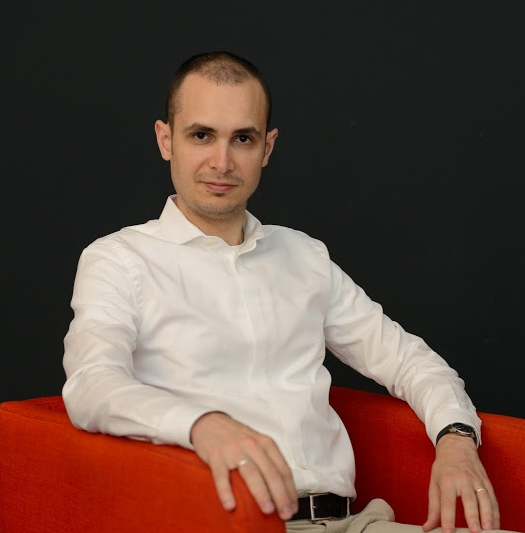
Andrei Gheorghiescu. Builder of Business Operating System Architecture. I sit with CEOs who've hit a wall they built themselves, help them see the architecture underneath which reveals options. Then we work together to rebuild it.
I chose my current work with care and purpose, not to avoid hardship but to address it head on from an integrative place. I work on what most people ignore or avoid.
I have a background in entrepreneurship (10 years, 4 companies founded), software delivery and organizational design. 20+ years building and restructuring operating systems for technology companies across Europe.
LinkedInandrei@gheorghiescu.ro · +40 744 421 848